
Building a Legacy in North Carolina’s Furniture Country
Brothers Charlie and Hunter Munday own Carolina Leg Co., a furniture company born out of a rich legacy of furniture making, both personally and regionally. “We grew up in a boom town,” Hunter recalls. “Our parents worked in the furniture industry. My dad worked for Broyhill right out of high school and worked his way up.”
Then came the early 2000s. “The factories started shutting down left and right, everybody lost their jobs. You don’t have to drive far to see giant empty buildings with trees growing through them.” That’s where the brothers saw possibility.
The brothers began with a simple idea: crafting furniture legs. They started a small side hustle, purchasing basic tools and setting up shop in Hunter’s basement. When their first furniture leg sold on Etsy, excitement quickly gave way to panic as orders began rolling in. Hunter remembers thinking, “How are we going to make all of these?”
That question led them to Mountain BizWorks seeking a business loan. With encouragement from their lender and coach, the brothers began to see their business through a new lens, taking a closer look at the market gap they were uniquely positioned to fill.
Producing quality table legs through traditional methods typically requires highly trained artisans, costly machinery, and significant time, all barriers that often make custom work inaccessible or prohibitively expensive. By drawing on their family’s legacy of craftsmanship and a deep network of industry connections, the Munday brothers found a way to honor that tradition while delivering well-made, reasonably priced products.
Those first sales marked a turning point: proof that the demand was real and that their side project was quickly becoming something much bigger.
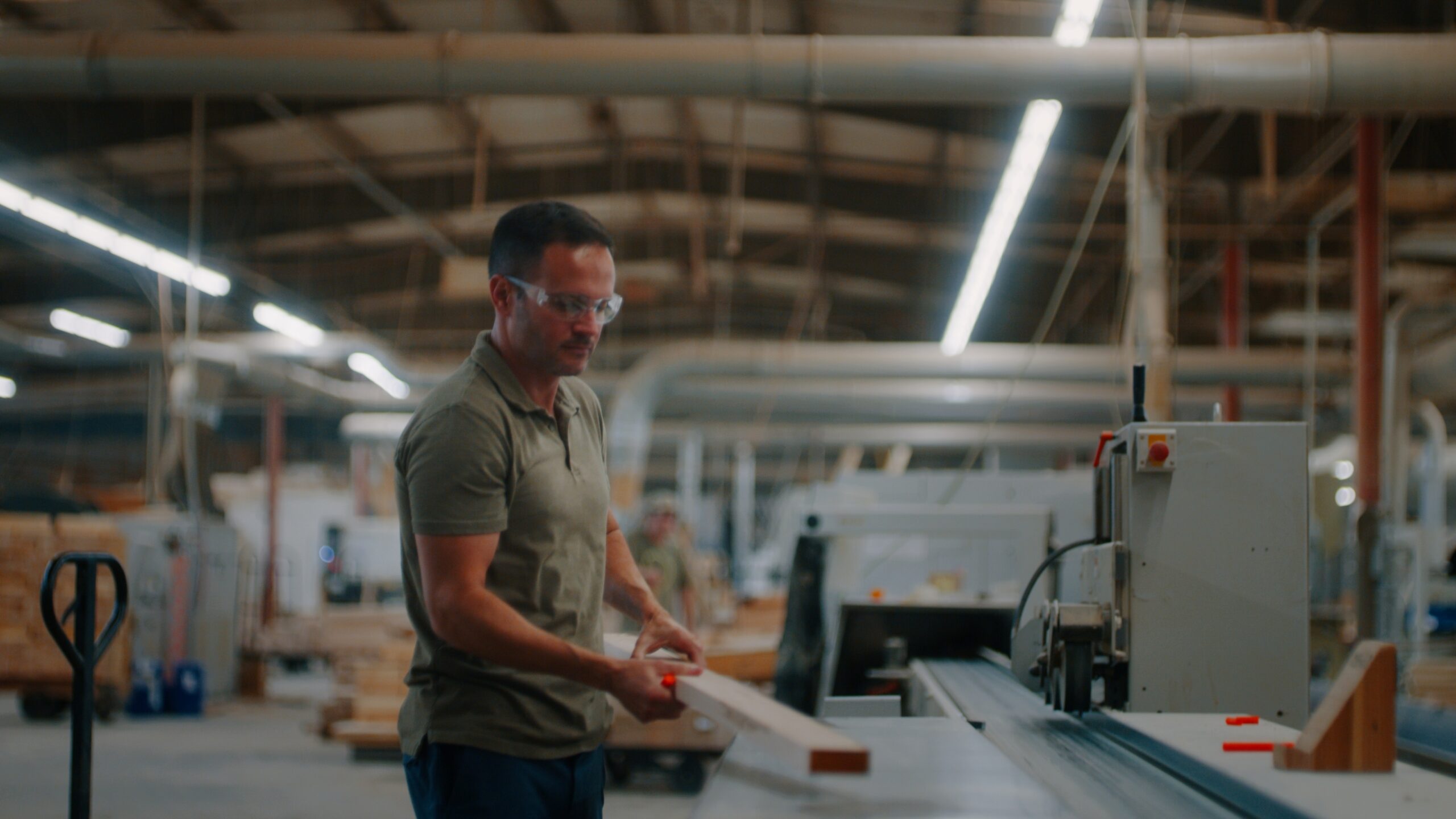
“Mountain BizWorks helped us to outfit the building and gave us a head start,” Hunter says of their first equipment loan.
The first machine purchase taught them hard lessons. The 20-year-old Italian lathe came with a manual in Italian, and they couldn’t get it to turn on. “You always have to believe, no matter what,” Hunter reflects. “If you lose faith for even a second, it’ll knock you down.”
With luck and determination, they found another manufacturer in the area with the same machine. That operator helped them get it running. “Had we been anywhere else, it would just never have happened,” said Hunter.
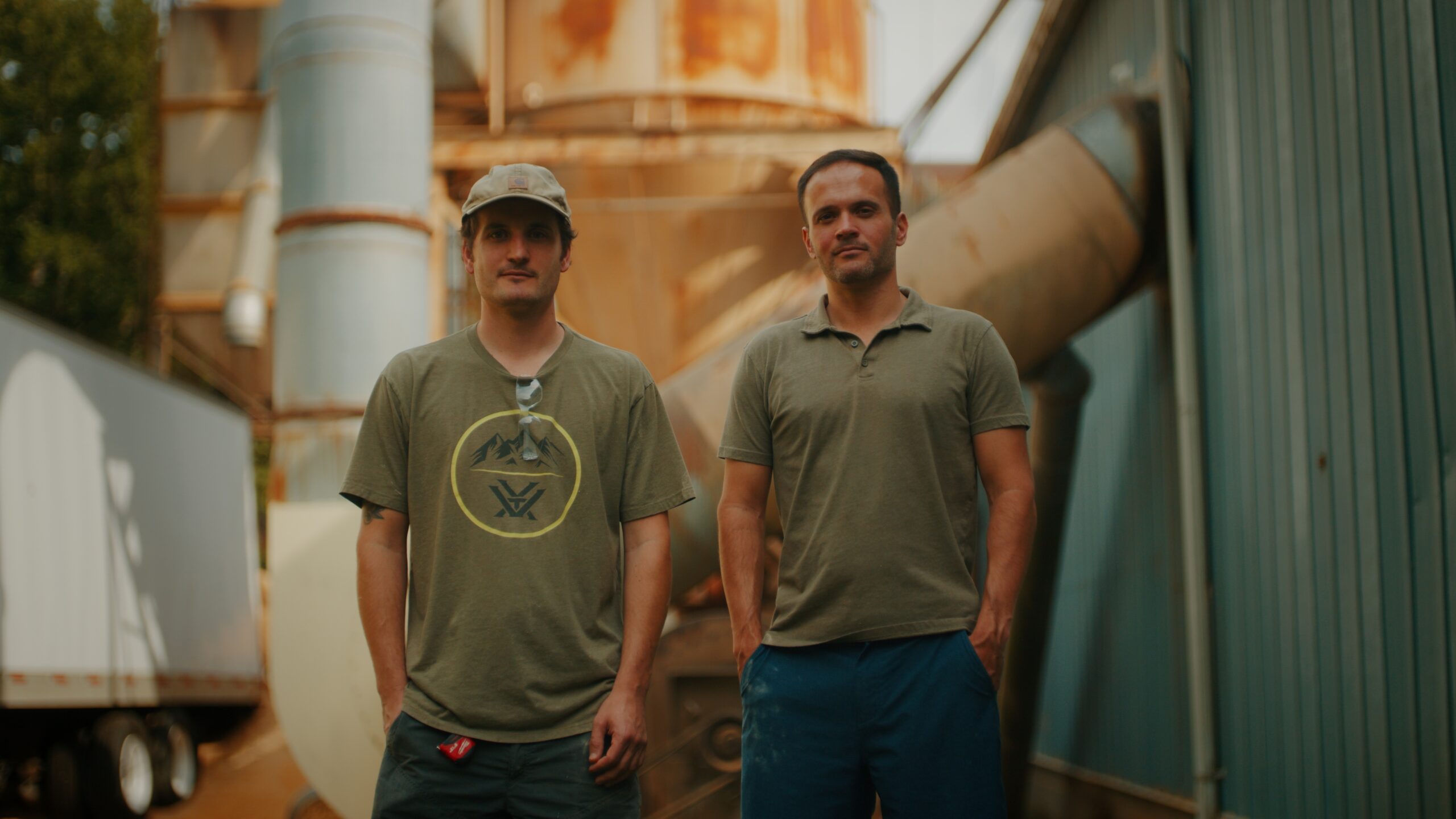
From the basement, they moved to a 2,500 square foot shop, then to a larger building purchased again with Mountain BizWorks’ help. This new home? Incredibly, it was an existing wood component business with five employees and 8,000-10,000 square feet.
Then, during COVID-19, supply chain disruptions created additional opportunities for local work. Upholstery manufacturers couldn’t get chair frames from aging suppliers whose children wanted nothing to do with the business. Carolina Leg Co. invested in CNC equipment and automated machines for complex joinery.
“We were able to build some really good relationships because demand was so high that people were looking for products anywhere and everywhere,” Hunter explains. Plus, with everyone home doing DIY projects and needing desks for remote work, “We were blowing the walls off the place.” They soon purchased equipment bigger than their building. “This machine is longer than this wall,” Hunter laughs. “It was either knock the walls out or find another place.”
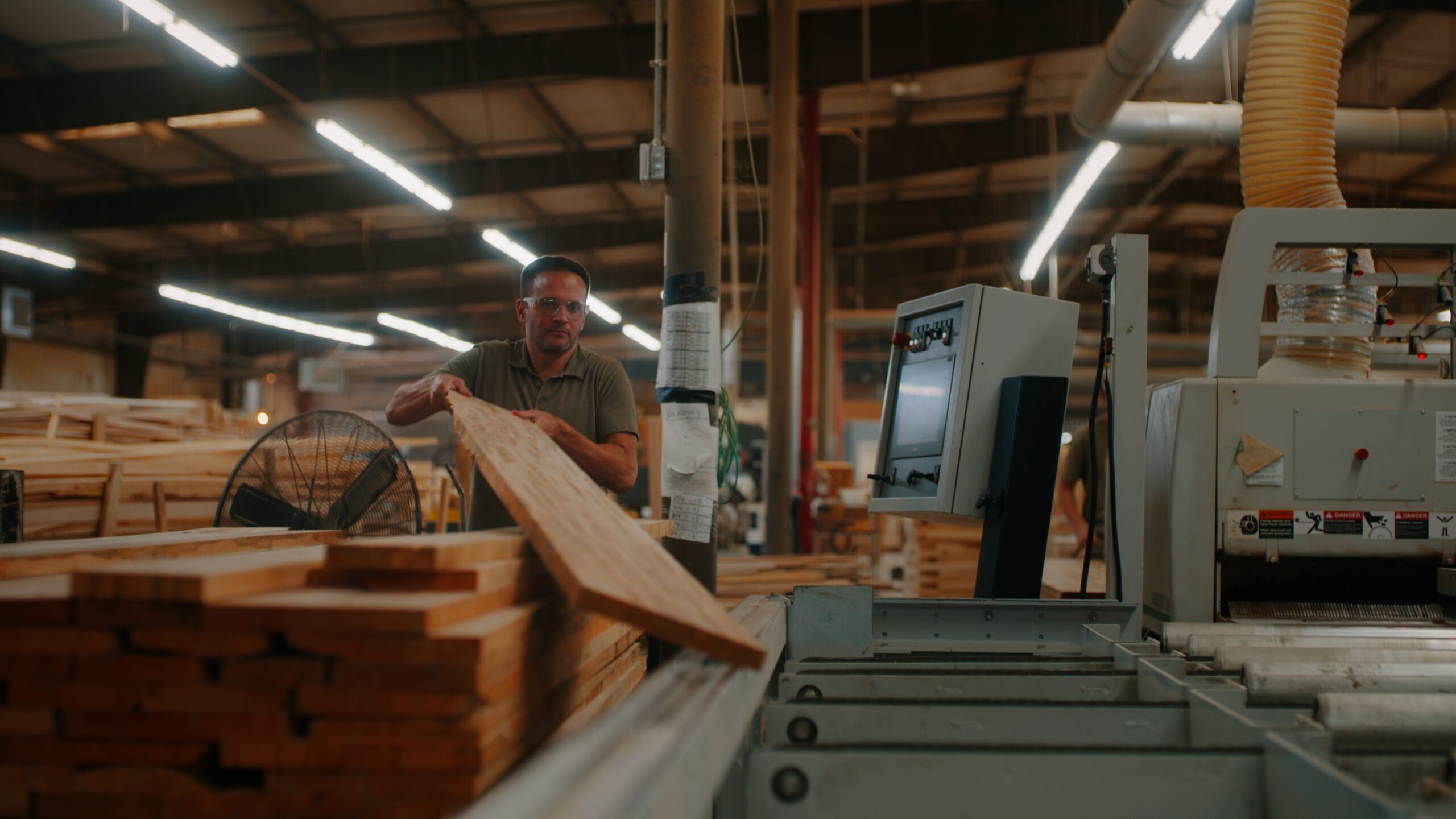
They then purchased their current 60,000 square foot facility: a former curved plywood plant from the 1940s with valuable existing infrastructure.
Now, Carolina Leg Co. isn’t afraid to blend old and new to further their business. They employ workers from previous generations—veterans of Broyhill, Bernhardt, and other closed factories—while investing heavily in modern technology.
“We’ve invested way more in automation and equipment that allows us to produce products at a higher quality level and at an output that would require us to be much bigger to do,” Hunter notes. “We’ve taken older labor and skills and combined it with newer ways of doing things. “The approach emphasizes safety alongside efficiency, which is crucial in an industry historically marked by dangerous conditions.
For Charlie and Hunter, Carolina Leg Co. represents more than business success. It’s about proving an industry isn’t dead, and that skilled, local manufacturing can thrive in Western North Carolina again.
“We’re this little operation down here in the hills that has thrown up a finger to the people that said it couldn’t be done,” Hunter says with pride. “You come in here and you see machines that were made in the 40s and 50s and people that were working back then running them again.”
Carolina Leg Co. is proof the legacy of North Carolina furniture manufacturing isn’t dead. It’s being rebuilt, one table leg at a time, by two brothers who refused to let it die.